Exclusive Interview: Reservation Dog’s Dallas Goldtooth on Getting Representation Right—and What Really Happened in The Last Frontier’s Shocking Finale

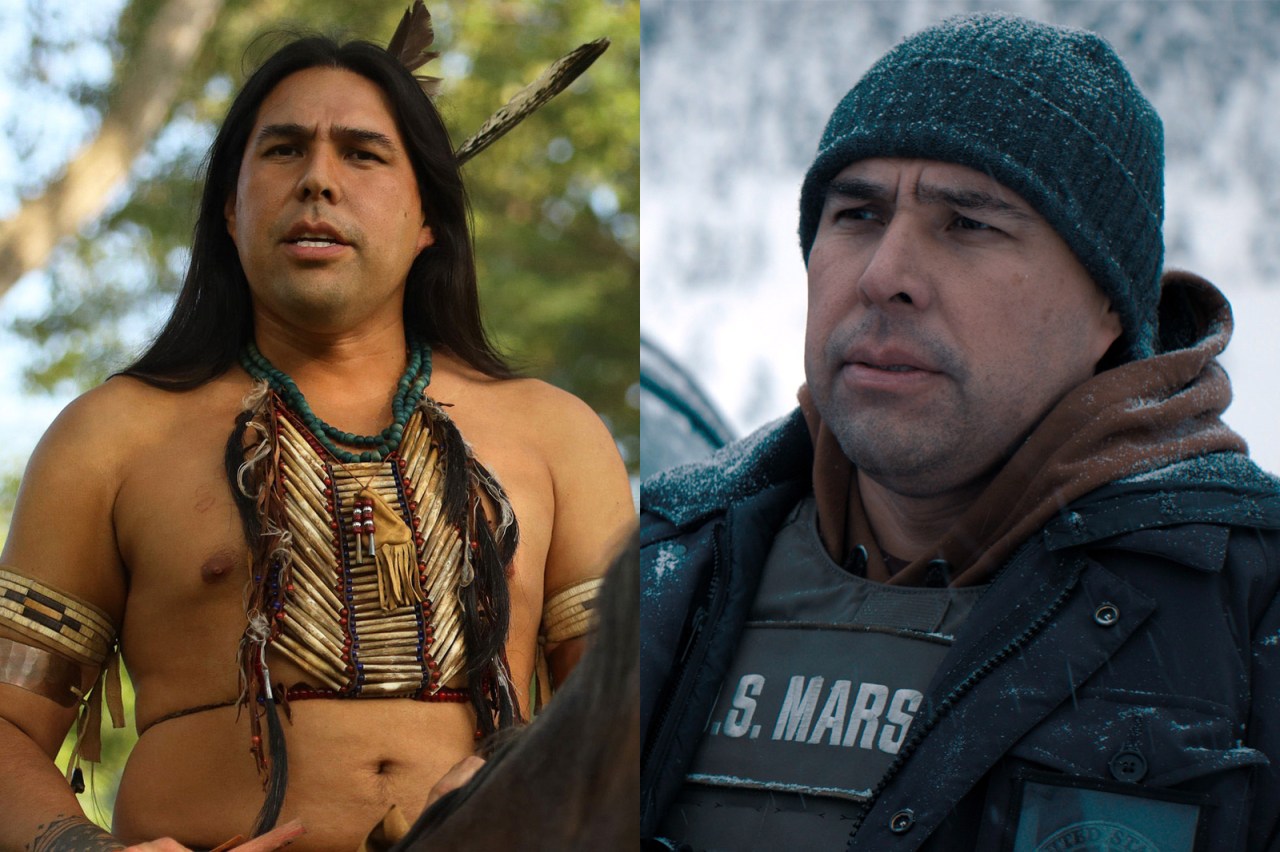
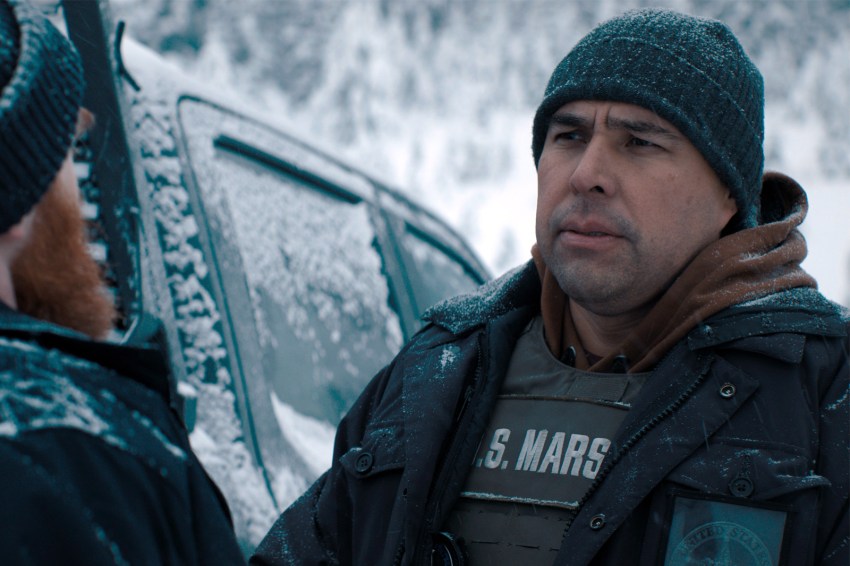
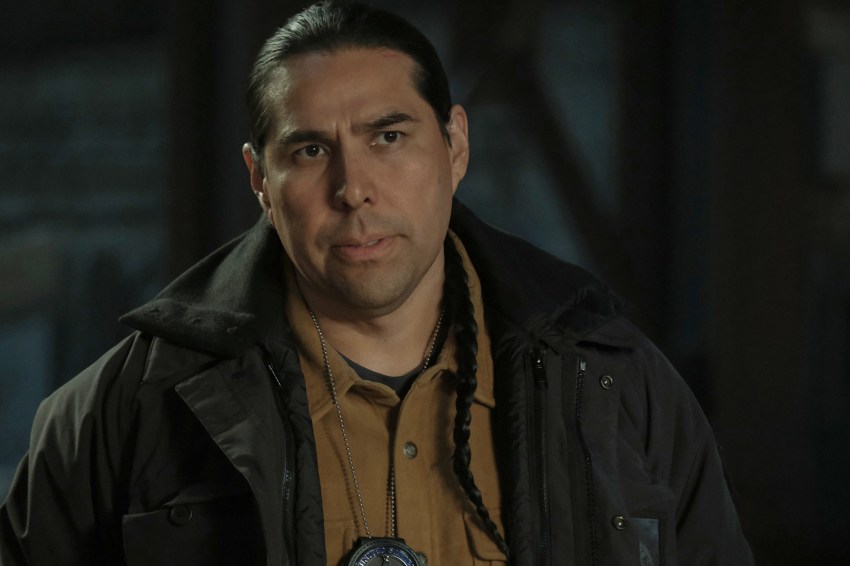
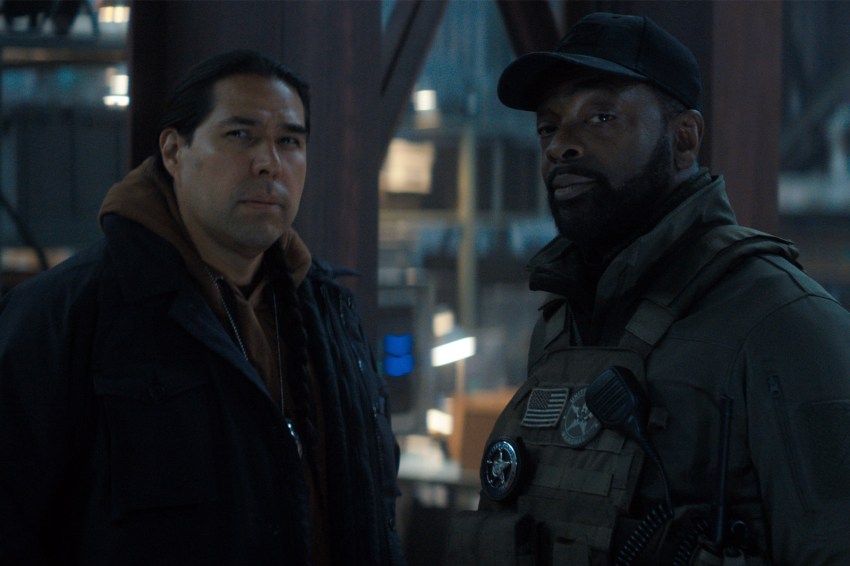
We spoke to Reservation Dog‘s Dallas Goldtooth about his latest role in Apple TV’s action thrillerThe Last Frontier, which wrapped up its first season today, (12/5). Goldtooth plays Hutch, an Alaskan deputy U.S. Marshal and right-hand man to series lead Frank Remnick, played by Zero Dark Thirty‘s Jason Clarke.
Goldtooth has a long background in comedy. He was a founding member of Native American sketch group ‘The 1491s’ known for their work on Rutherford Falls and Reservation Dogs, where Goldtooth was a writer in addition to playing series favorite William “Spirit” Knifeman. He’s also an activist dedicated to raising awareness for Indigenous and environmental causes.
He shared with us how both of these aspects of his career impacted this pivot to an action series, and his thoughts on the big finale, hopes for Season 2 and more.
Table of Contents
The following interview was lightly edited for readability, and contains light spoilers about the events of the series finale.
How Dallas Was Introduced To The Series
TC:
There’s just so much going on in the premise of The Last Frontier. I can’t even begin to imagine how does that get condensed into an elevator pitch or synopsis. How was this idea shared to you?
Dallas Goldtooth:
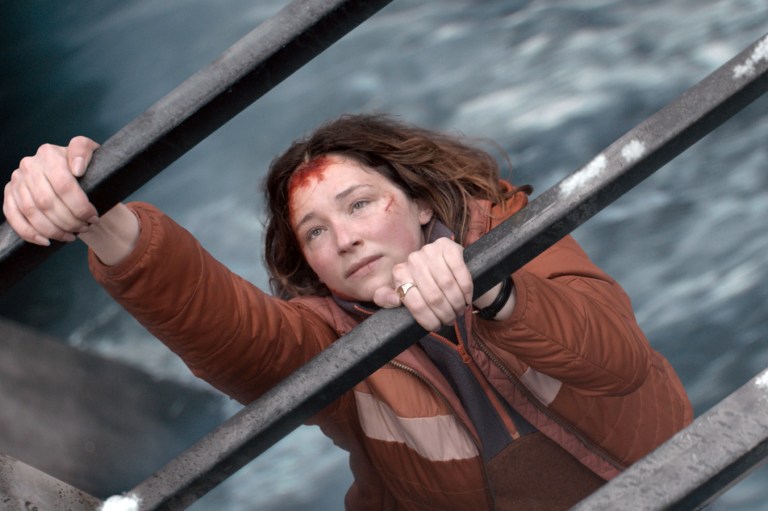
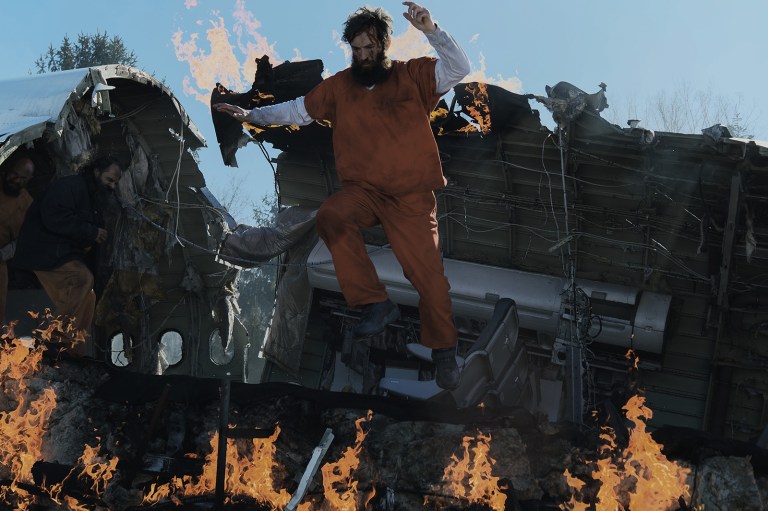
Well, first of all, it was primarily pitched as Con Air meets The Fugitive. It’s a bit dated. Some folks get it. Some don’t. But the concept is that a an airplane carrying a number of hardened convicts crashed lands in the remote wilderness of Alaska, and the local, the US marshals outpost there in Fairbanks has to go and apprehend them.
And one of these convicts though happens to be a rogue secret agent of sorts. And the story really revolves around who is this agent? Why is he on this plane? Why was he on this plane? And what’s what’s his mission?
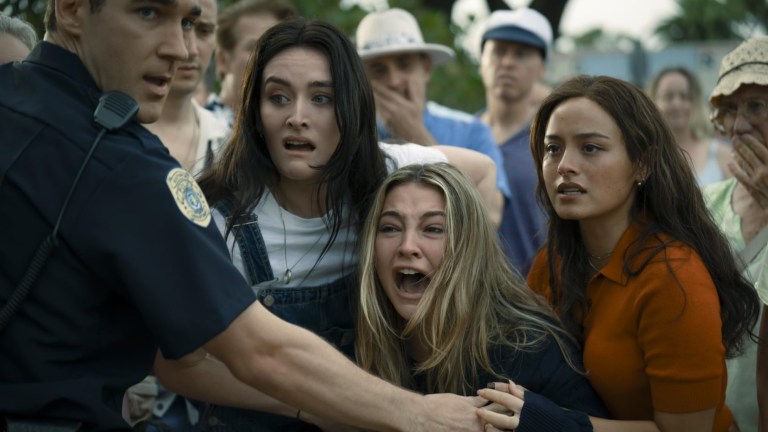
And from there, it goes into this wide range story of world espionage that takes place in this small community of Alaska. I think the show has a lot of heart. It’s really, really grounded in the sense of community in Fairbanks and, how this crazy wild event of a plane crash could really deeply impact that community.
How Dallas’ Work As A Comedian and Activist Impacted The Last Frontier
TC:
I really admire your activism and love your background in sketch comedy. I think those two things go hand in hand. Americans really express a lot of discontent through humor, and comedy can be so subversive. [Co-creator] Jon Bokenkamp said he really wanted to get your feedback on the POV of an indigenous character as well as for the entire series.
How does the approach to representation change when you are dealing with an action thriller as opposed to a comedy?
Dallas Goldtooth:
Yeah. I think there’s a fine line to all of it. Right? You don’t wanna beat people over the head. I think that’s one of the biggest turn offs for folks is when they feel like they’re being lectured at.
And so, comedy often is the the best disarming methodology to change people’s minds or at least make us think more critically about the world around us. We don’t have comedy, and it only gets a little bit harder. Right? And in this show I’ve had a lot of good conversation with Jon before and during production about little things that we’re like, “Hey. We could work on this or this should be tweaked a little bit”.
Sam Alexander is a culture consultant for the show. He’s Alaska native. Gwichʼin Diné, specifically. And, you know, I really pushed hard. Like, we need to get him more involved, make sure we’re really getting his opinion because I wato to make sure we do right by the communities there in Alaska.
We ended up hiring him to come on board […]. He’s one of the actors in the show. So that was really important for me, but I think it’s just important for the series overall. […] I remember we had this conversation, like, the one of the first times I talk is in, I think, Episode One, I introduced and welcome everybody to, you know, the territories of the lower Tanana people.
And just little snippets like that of acknowledging people in that way goes a long way for those who are from that community.
TC:
In researching some of your activism, I saw that Alaska is a place that’s near and dear to your heart. You’ve raised awareness for indigenous sovereignty and ecological preservation connected to the Ambler Road project—what was it like being part of a project where Alaska, its natural beauty, its wilderness is such a main character, but at the same time, you’re filming the series in Canada. You know, you just spoke to cultural consultants, but was there any prep that you did specifically to kind of embody that Alaskan spirit and the community that we saw on screen?
Dallas Goldtooth:
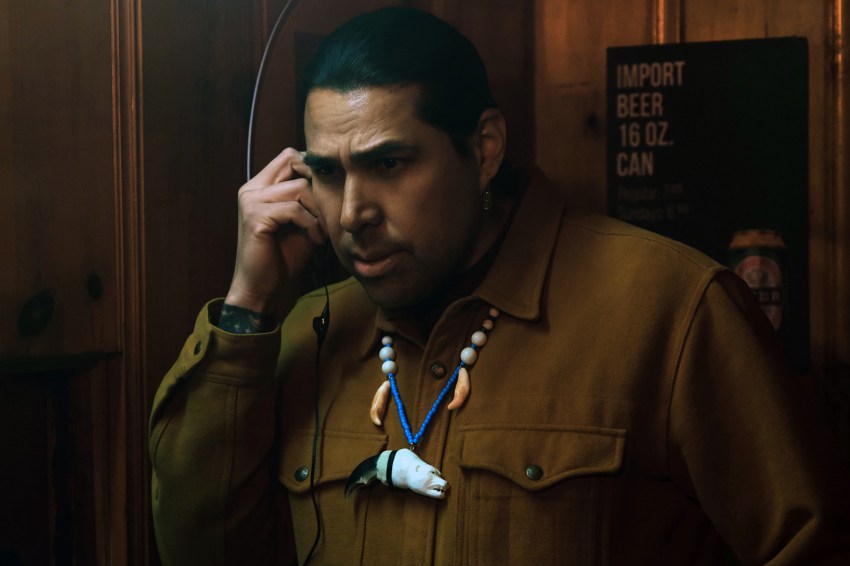
A lot of conversation. I talked to a lot of, I have a lot of friends in Fairbanks. Because of my organizing work in the past, I have a lot of strong relationships with on the ground people in the very communities that are portrayed in this show. And so I called, talked to them.
I had a lot of deep conversation about, one, is it okay? How do I, I want to come into this in a respectful way. How can I best represent people on screen? The other part of it is, like, I’m in a very privileged position here on a major TV show, on a major streaming platform, why wouldn’t I use that space to uplift the actual fights that the people that we are portraying in this show are going through? The Ambler Road project being one of them.
I mean, the current issue right now, we have a crisis in Western Alaska. We have entire villages who are being flooded because of the remnants of a typhoon. And so, you know, thousands of people have been stranded and are currently being evacuated from their communities. I want to use my platform to uplift that because I think the idea of this show and one of the reasons people like shows about Alaska is because we don’t hear many stories about Alaska. Like, it’s this kind of mythological space that exist way out there. Right?
I mean, that’s why it’s they call it The Last Frontier. But for the people from there, it’s not the frontier. It’s the center of their universe. And so I think it’s key that we remind ourselves that and make sure that we are doing right to uplift the the fights that they’re going through.
TC:
The one thing I really, you know, got invested in with this series was that social relevance and the way it really explores this human social contract all the way from, two strangers to the family unit, local, national, international agencies and governments. And I saw a lot of that nuance in your activism where you’re really involved with local communities and artists in the U.S., but also raising awareness for the Sami people in in Nordic countries. So what do you think the series got right about that balancing act between being a member of a local community, but also a global citizen in a a very digital age where we’re all connected through our phones at the touch of a a button?
Dallas Goldtooth:
It’s a great question. It’s like I said, it’s a hard line to walk because we’re trying to tell a fast paced action drama. And so there is the real estate that’s there is very, very valuable. Right? And so we want to make sure that we are weaving all this in, but at the same time, making sure we’re telling a a good story.
And I think that this dynamic of, like, a local story, this local drama is is hitting this family hard, but there are world implications. I mean, hey. There’s so many stories that do that, but I think that this show does a good job of really making sure that there’s a heart to it, that it does feel real and it’s grounded.
The the concepts might be kinda out there. Right? The idea of the crash land and all this stuff, but the the personal drama and the stakes at hand feel real, and I think that goes a long way. And I think that there’s a lot of space in here. There is a there is a space to talk about, like, you know, people often feel so overlooked in in remote places of this country but also in the world. In Alaska, that’s especially true where their narratives, their struggles often seem like they they are superseded by whatever’s happening in Washington DC. And that’s definitely a dynamic here of, like, hey who’s in control and who’s I mean, whose lives are on the line here, really? And so that I think there’s a there’s a part that I think the show does fairly well.
Dallas’ Character Hutch, And Relationship With Jason Clarke
TC:
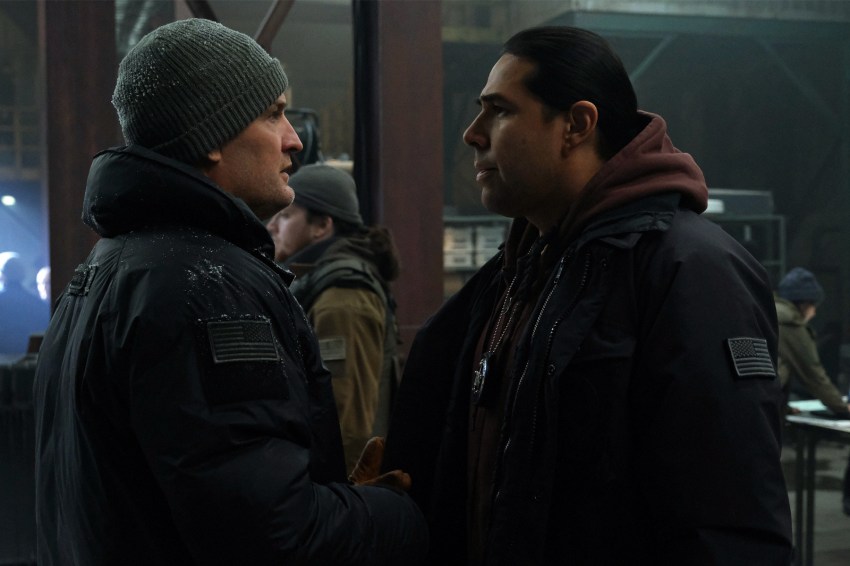
When you talk about the heart that the show has, I think a lot of that does connect to your character, Hutch. You know? And it’s a big part of how we interpret Frank and his morality. The series really pushes that envelope and we kind of see Frank teetering on this pedestal and and waiting to see if if he’s gonna fall. But Hutch’s unwavering trust and that really powerful strong male friendship vouches for his character in a way.
How did you go about building that chemistry with Jason [Clarke] and really creating such a depth from your dialogue together?
Dallas Goldtooth:
I feel very lucky that me and Jason have, like, very similar approaches to camaraderie and building space, and we just connected so, so very well that it actually wasn’t that hard. From day one, we really, really connected very well. He is an absolute professional. Like, I look up to him. I learned so much from him on this project.
And he coached me through through moments and gave me good tips on on acting because I’ve never done something of this nature. But he was also so giving of his time and his experience. And that, on a personal level, built so much trust between us to where he just gave me the space to perform as I want to perform, but also, like, be like, “Hey, I got you. Don’t worry. We can do this together. We can work this out. We can work through the scene”. So I think that that really built up the camaraderie that comes across on screen.
TC:
Did it feel natural to you to embody a character in law enforcement and to be doing these elaborate fight scenes and and learning that choreography, or was there a fish out of water moment?
Dallas Goldtooth:
Well, I think in the very beginning, while we’re going through the rehearsals, and you’re surrounded by, like, professional stuntmen, and they know what they’re doing, and you’re like thrown into the mix. But at the core of it, I’m just a freaking kid that’s enjoying making movies. And so, hell, yeah! I’m going to make believe the crap out of this and be like, I’m an action star here in some way, and I want to do some stunts.
So once you get over that initial anxiety, I really just kind of went with it. And also that’s acknowledgment to the stunt team and Sam Hargraves, who directed that first episode of just like, look. We’re building this together. We’re gonna make it happen, and let’s do it.
The Big Finale And Hopes For Season 2
TC:
The end of the series to me really reminded me of the very first episode because the show felt like this plane full of really big ideas that needed somewhere to land. And I was just on the edge of my seat trying to see, like, how how are they gonna do this? Especially because a lot of the takeaways were being delivered by indigenous characters and, you know, we’ve seen in the past TV and film can sometimes oversimplify those types of messages or have society’s problems magically resolved by people of color or a minority.
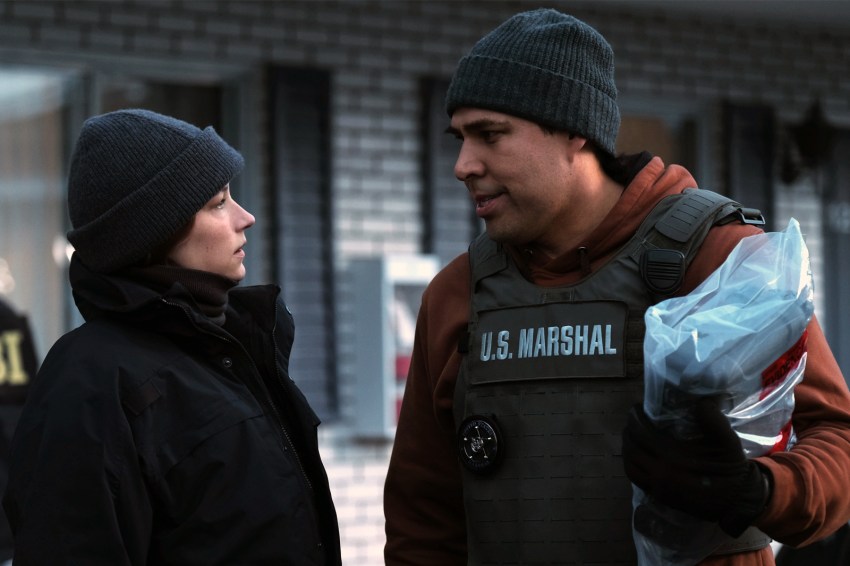
But what I saw was a really practical representation of indigenous characters who are doctors operating in native languages and law enforcement agents. We have public servants and politicians participating actively in, you know, the system that the the show has kind of exposed to be somewhat, you know, pretty flawed. What was most important to you in terms of representation for those really powerful final scenes?
Dallas Goldtooth:
Yeah. I think that’s one, just seeing people in those roles where it’s not explicit saying “this is the Native American doctor” or, you know, that that “this is a Native American police officer”. Just seeing people occupy the roles that we literally occupy. Right? It’s just being as we are, I think, goes a long way.
It normalizes the that we exist, that we are here. We’re still we’re active participants in the society that we’re trying to build together. And I think that’s really immense and powerful. And I think you also have good instincts of seeing also, like, the story is chaotic. There’s so much going on, but it’s like it’s it’s a wonderful mess of, like, espionage and danger.
But, really, it’s like a danger that’s external to this community that is kinda like, “We don’t want nothing to do with this. This is not ours to carry”, which is kind of the tale of colonialism in general. Like, “Hey. This is not our mess, but you’re putting it upon us”. So I think that is a really unique dynamic that is played as we go through this series, and I think it also sets up a lot of potential for the story to go in many other directions should we wish to do that.
TC:
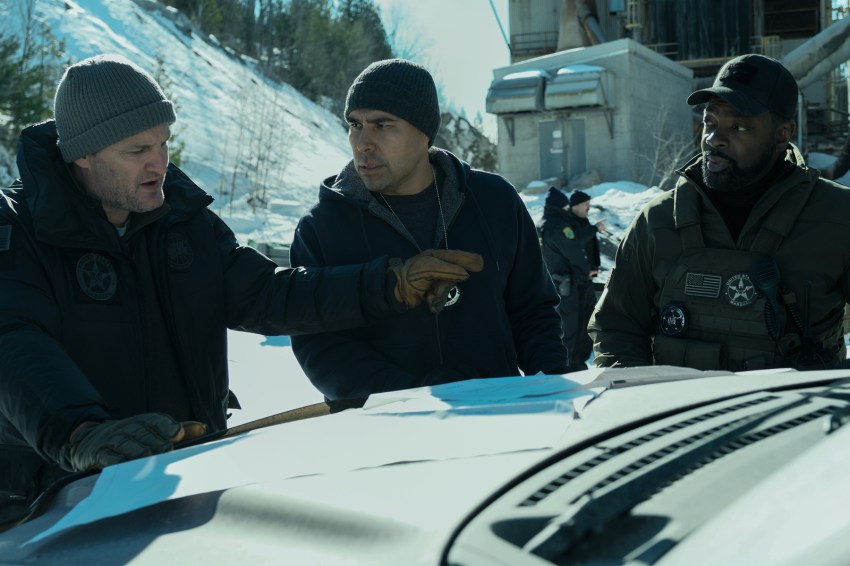
That was going to be my next question. So, it felt like the plane touched down and then pulled right back up for a potential Season Two. And I’m really curious, you know, what kind of exploration would you like to see for these characters and this community if the story continues?
Dallas Goldtooth:
I would love to see more more space given to the native stories, native community, native performers. If there’s a season two, I want to see some of the native women in this show shoot a gun. I want to see them shooting some guns. They don’t have to be shooting a bad guy. Just show them hunting because everyone hunts up in Alaska. Let’s show off the skill and give them some agency. I think that’s what really would would get me going to see that happen.
TC:
Any upcoming projects that you’d like to share?
Dallas Goldtooth:
I’m working on a podcast series, and, hopefully, I can get it out by the end of the year. But really, just excited to be promoting this show and help folks come out and watch it and, give us some support.